
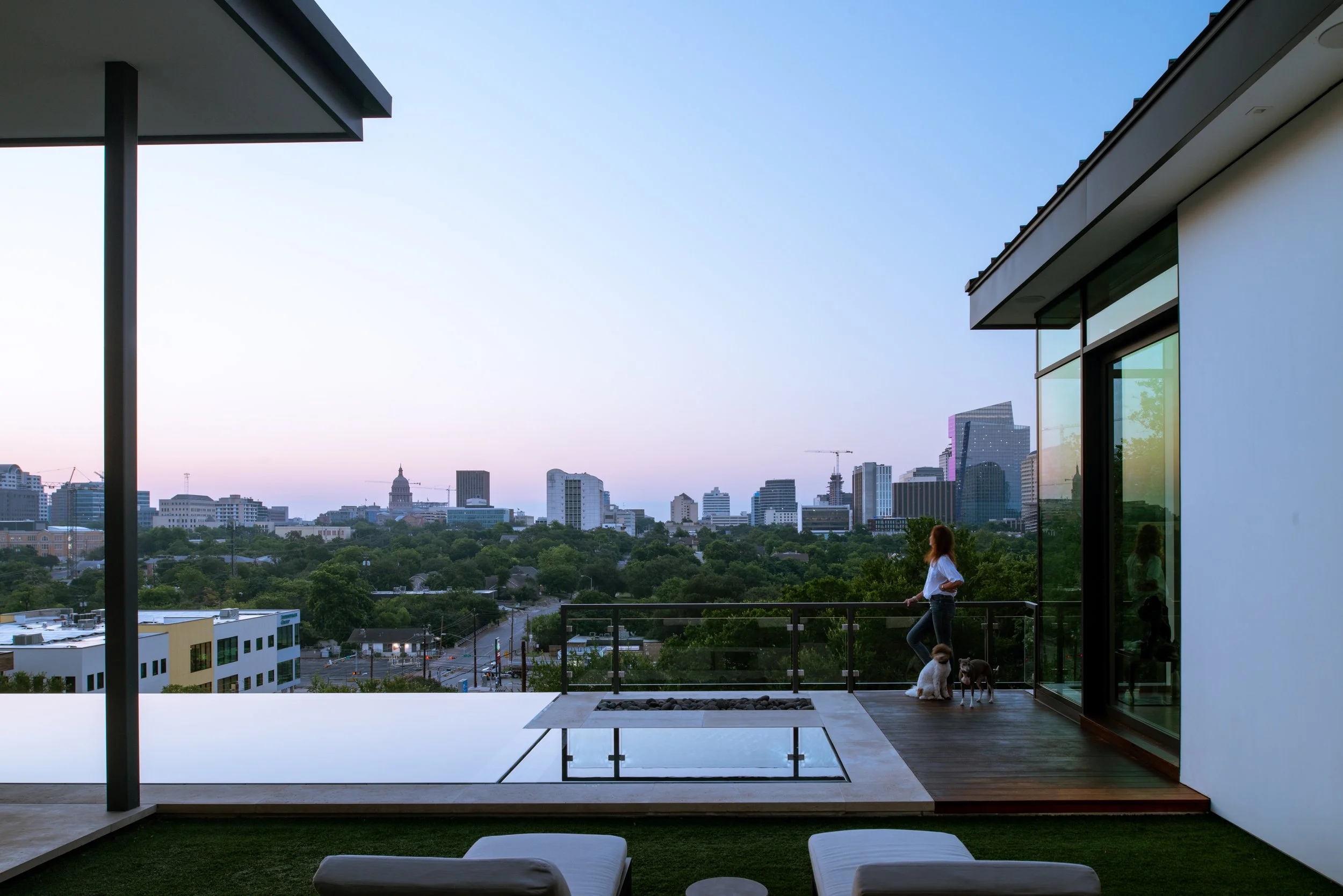
Most of my work begins with a blank site — raw land, a foundation, a set of drawings that will become something new. The Clarksville Residence is a different kind of project. It begins with something already there. A 1915 bungalow on a steep hillside in one of Austin's oldest neighborhoods, with views of the State Capitol and the downtown skyline that most architects would design an entire house around. LaRue Architects didn't start from scratch. They started from history — and built forward from it.
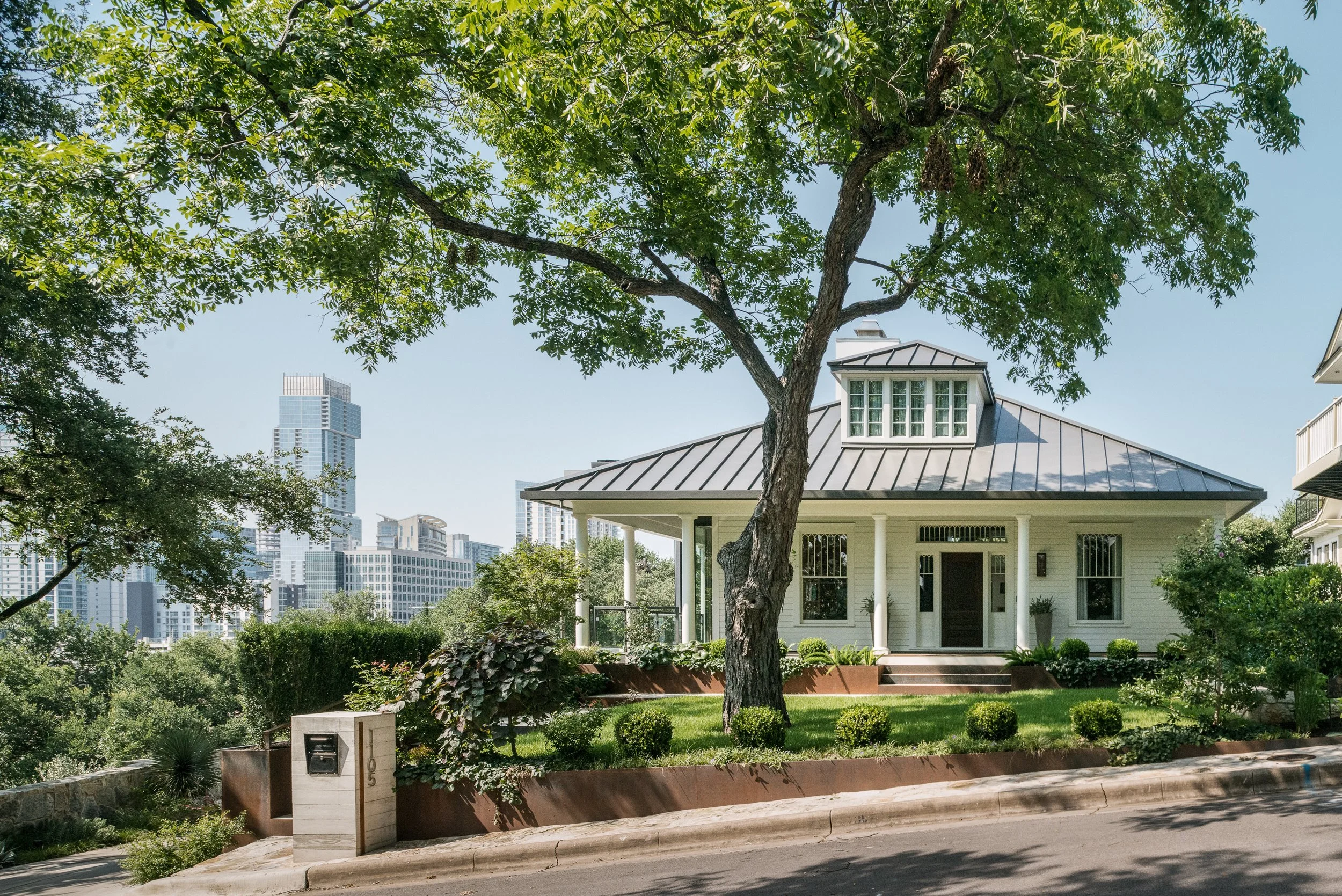
James LaRue and Emily Haydon were brought in to transform a house that had survived more than a century in a neighborhood where most of its contemporaries had been demolished. The previous owner had lived there for over fifty years and refused to let it be torn down. That kind of stewardship sets the tone for everything that follows. You don't bulldoze that story. You build on top of it.
Historic in the Front, Modern in the Back
The design concept is deceptively simple: preserve the traditional street-facing facade and add a modern glass-and-steel addition to the rear. In practice, this is one of the most technically and aesthetically demanding things you can do in residential architecture. The two halves of the house have to feel like they belong to each other — not like a renovation that happened to one of them.
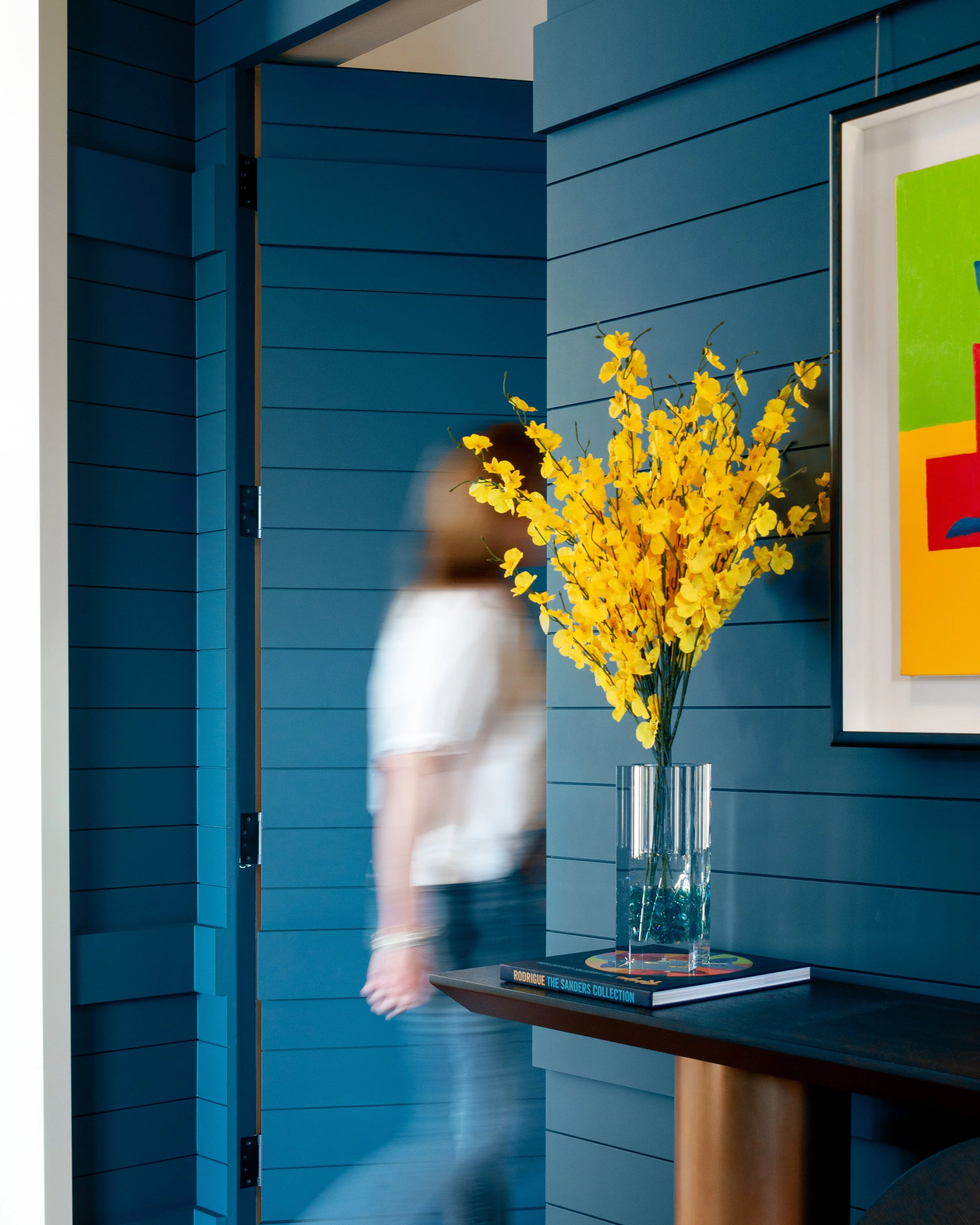
LaRue's material strategy makes this work. The front uses Boral siding that mimics the original exterior, with a reconstructed hip roof and wrap-around porch that sits comfortably alongside the remaining historic homes on West 10th Street. The back is a different world — floor-to-ceiling glass walls, stucco and metal panels, and a negative-edge pool that seems to float above the city. Teak decking ties the two halves together across the porches and terrace. And the painted blue soffit above the front porch is a deliberate nod to Clarksville's roots as one of the oldest post-Civil War freedmen's settlements west of the Mississippi.
From a photography standpoint, this duality is the whole story. The challenge isn't choosing between the historic front or the modern back — it's finding the frames that show how one becomes the other. The transition happens in the entry hall, where rich shiplap paneling and art rails give way to open, light-filled modern spaces. Doors to the original bedrooms and office are completely concealed in the walls, so the procession from old to new feels almost cinematic — you walk through what feels like a carefully restored traditional home and then the space opens unexpectedly to glass, light, and a panoramic view of Austin's skyline.
A House That Turned Sideways
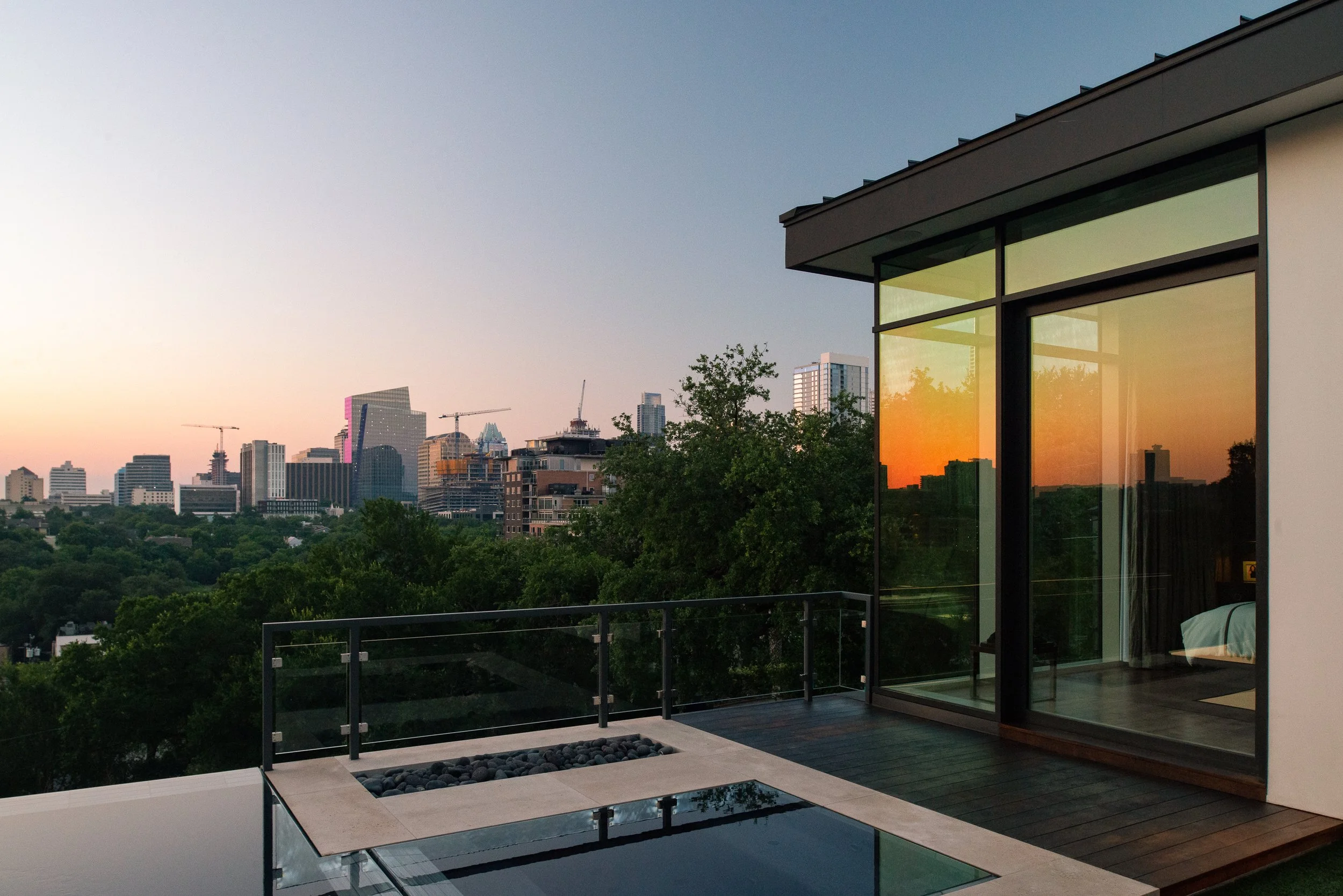
One of the most compelling architectural moves here is something you have to understand spatially to appreciate: the renovation essentially reoriented the house. The original bungalow faced the street, as bungalows do. The spectacular eastern views of downtown — the Capitol dome, the towers along Congress Avenue, the ever-changing skyline — were only visible from a side porch. LaRue turned the living spaces to face those views directly. The open-plan living, dining, and kitchen area is now organized around floor-to-ceiling glass walls that frame the city.
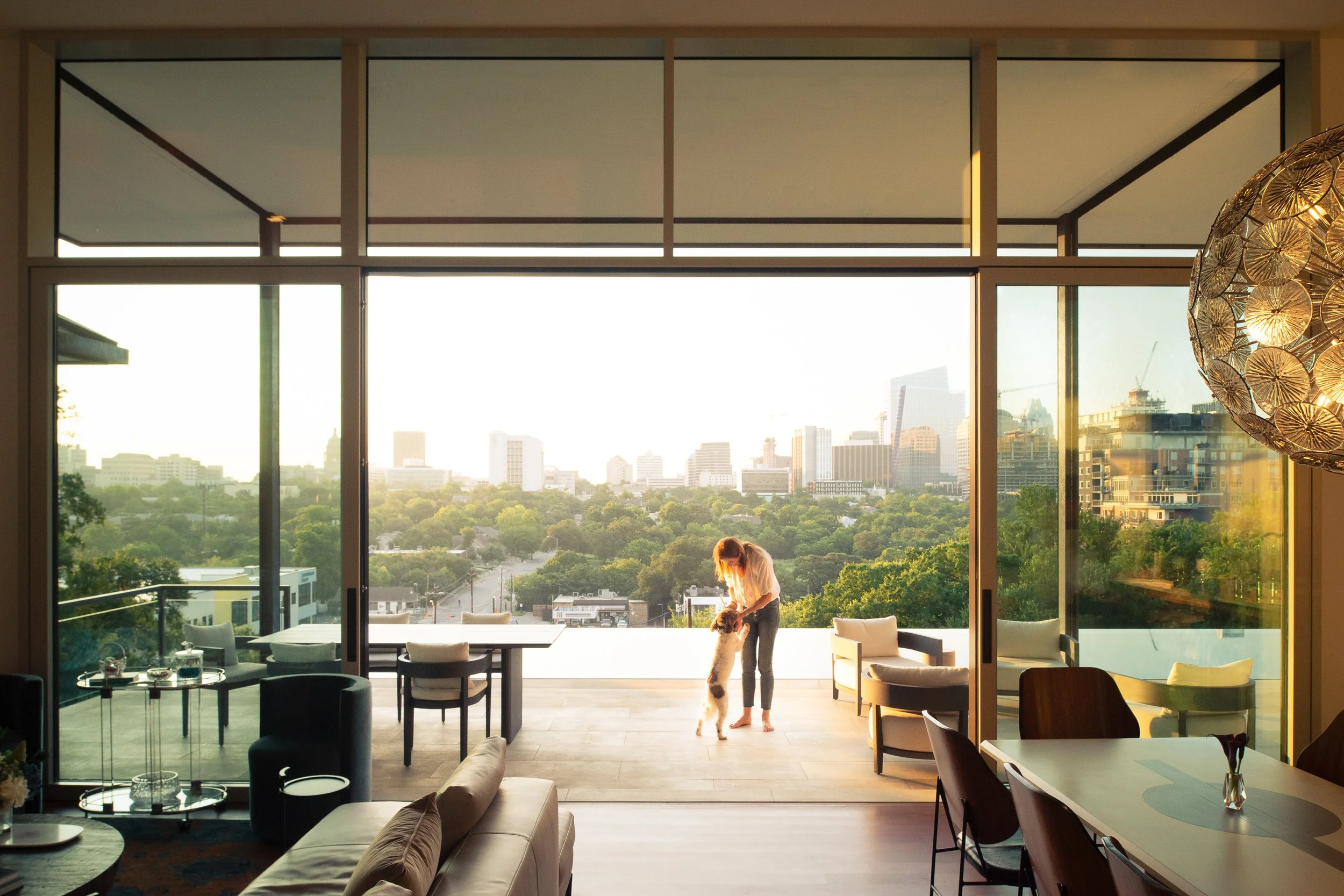
This reorientation created the photograph I kept coming back to during the shoot. Standing inside the main living space, looking east through ten-foot-tall sliding doors and four-foot transoms, with the infinity pool in the middle ground and the Austin skyline beyond — that's a three-layer image that tells you everything about what LaRue accomplished. You're standing in a hundred-year-old neighborhood, inside a house whose bones are more than a century old, looking through contemporary glass at a 21st-century city. Past, present, and future in a single frame.
The structural engineering required to achieve those views is worth noting. Steinman Luevano Structures designed a system that eliminates the large headers typically needed above expansive glass openings. The soffit lifts to further expand the view, and a clerestory window wraps the corner at the kitchen, pulling southern light deep into the space. Loewen Windows and Doors fabricated the timber-frame curtain wall system that makes the seamless indoor-outdoor connection possible. These are the kinds of technical details that don't announce themselves in a photograph but define the quality of the space you're looking at. When the structure disappears, the view takes over.
The Site
Clarksville sits just west of downtown Austin, flanking Lamar Boulevard between West 5th and West 12th Streets. It's one of the city's most historically significant neighborhoods — established in the 1870s as a freedmen's community by Charles Clark, a former enslaved person. The houses that remain from Clarksville's early decades are increasingly rare. New construction and renovation have transformed the neighborhood over the past twenty years, but the best projects — and this is one of them — find a way to honor what was there before.
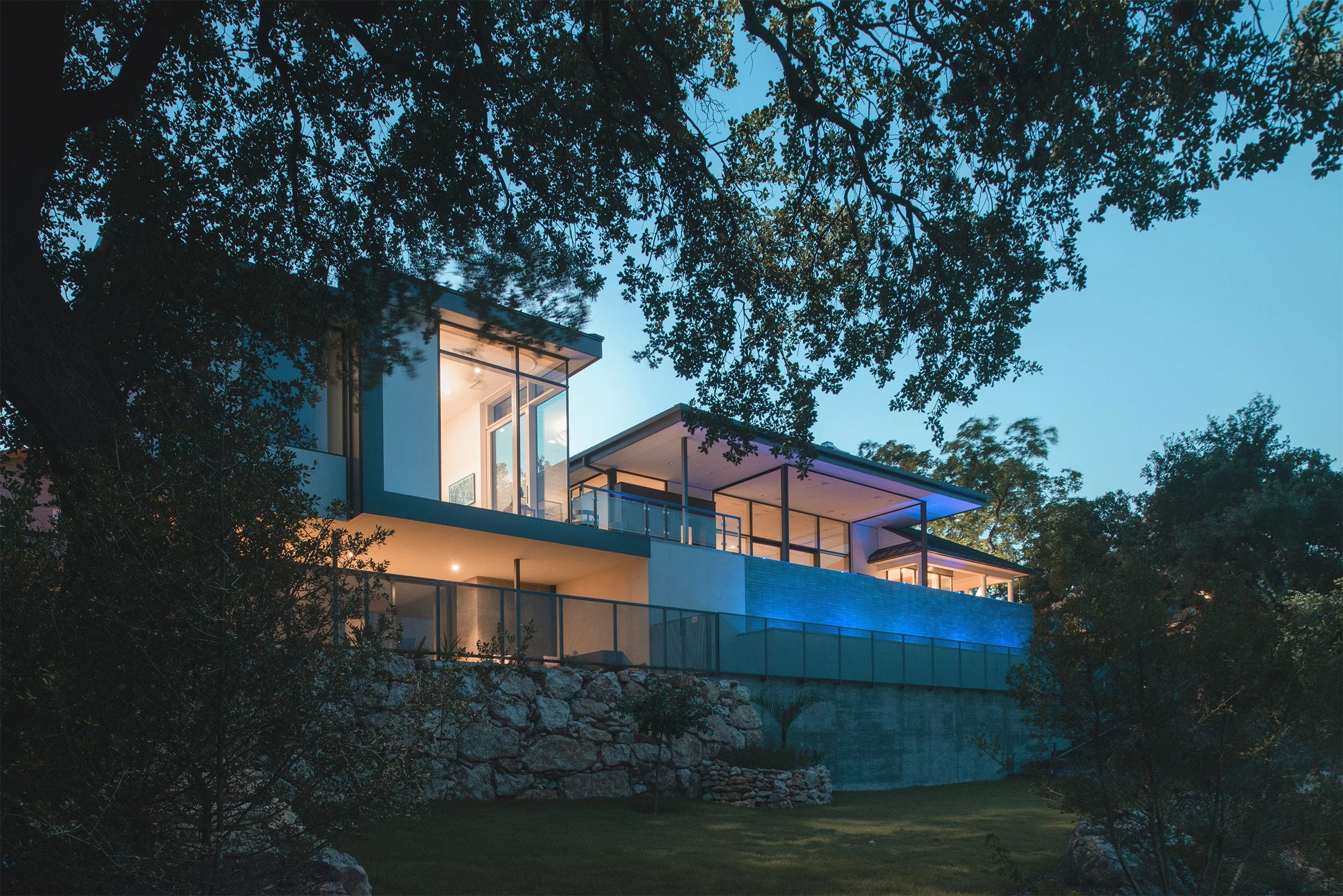
The lot itself is steep. The original pier-and-beam house sat nine feet off the ground at its lowest point, and the clay-heavy soil added structural complexity to everything the team planned — the addition, the pool, the floor-to-ceiling windows. LaRue and Foursquare Builders navigated these constraints with care, tucking a garage under one end of the house and an exercise room under the other, connected by two sets of stairs to the main living level above. The result is a 3,900-square-foot home that reads as modest from the street but reveals its full scale only as you move through it and down the hill.
![placeholder - exterior showing the modern rear addition stepping down the hillside]
Details That Earn Their Place
The stairwell walls are lined with laminated Life magazine covers retrieved from the original basement. It's the kind of detail that could feel gimmicky in the wrong hands, but here it works — a quiet celebration of the house's endurance through decades of American life. The custom wine display that shields the kitchen-to-garage stairs is another moment where function and craft align without calling attention to themselves.
Throughout the house, the interior design by Love County Design complements LaRue's architectural restraint. The material palette stays quiet — warm woods, neutral tones, moments of the same deep blue that appears on the front porch soffit. The landscape design by David Wilson Garden Design extends the indoor-outdoor relationship that defines the project. Nothing competes. Everything serves the experience of moving through the space.
For architectural photography, restraint like this is a gift. When the design team has exercised discipline, the photographer can too. I didn't need to dramatize this house. I needed to show it clearly — how the light works, how the spaces sequence, how the old and new coexist. The images that result from that kind of approach tend to be the ones that last.
Why This Project Matters
The Clarksville Residence was featured on the 2021 AIA Austin Homes Tour and has been published in The Wall Street Journal, Architect Magazine, Tribeza, Austin Home, the Austin American-Statesman, CultureMap Austin, and PaperCity, among others. That publication record reflects something important about the project: it resonates with different audiences for different reasons. Architecture critics respond to the formal strategy. Lifestyle editors respond to the views and the entertaining spaces. Local media respond to the neighborhood story. The images serve all of those narratives because the architecture itself supports multiple readings.
For LaRue Architects, this project represents a body of work that spans more than three decades in Austin. The firm has built over 400 private residences and has developed a Hill Country Contemporary vocabulary that is distinctly their own. The Clarksville Residence sits at a particular point in that evolution — a project where the firm's modernist instincts had to negotiate with existing conditions, existing history, and existing meaning. The result is one of the most compelling historic renovations in Austin.
This is the kind of project that reinforces something I tell architects and designers regularly: your best projects deserve images that will represent them for years. The Clarksville Residence was completed several years ago. It continues to appear in award submissions, firm portfolios, press features, and social media. The images don't expire because the architecture doesn't expire. That's the return on investing in photography that takes the work seriously.
Project Details Architecture: LaRue Architects — James LaRue, Emily Haydon Builder: Foursquare Builders Interior Design: Love County Design Structural Engineer: Steinman Luevano Structures Windows: Loewen Windows and Doors Landscape: David Wilson Garden Design Location: Clarksville, Austin, Texas Original Construction: 1915 Renovation Completed: 2021 Size: 3,900 square feet Photography: Tobin Davies