
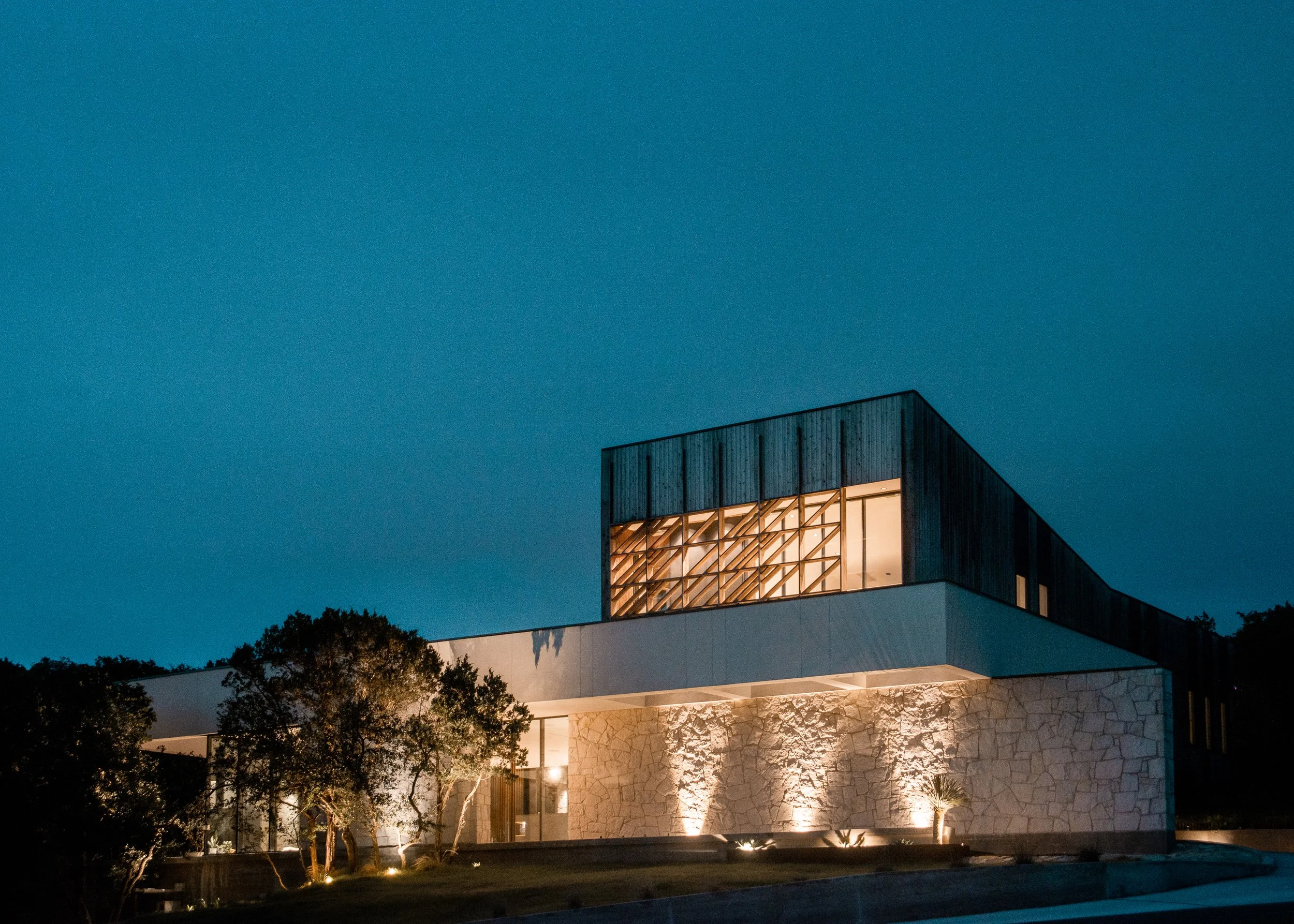
Some houses sit on their site. The Lean on Me House grows out of it — stepping down more than fifty feet of hillside in terraced volumes that make the topography feel like a collaborator rather than a constraint.
Designed by Francisco Arrendondo and Alicia Pierce of North Arrow Studio, this 3,030-square-foot residence in Austin's Barton Creek Habitat Preserve was completed in 2021 and has since earned a place on the 2021 AIA Austin Homes Tour, features in Tribeza and PaperCity, and the 2025 Austin Home Best Home in the Hill Country award. It was also recently listed for private sale through Robb Report — one of the rare Austin residences to earn that distinction.
I had the opportunity to photograph this house, and the experience reinforced something I believe about this work: the best architectural photography doesn't just document a building. It reveals the ideas behind it.
A House That Follows the Land
The Barton Creek Habitat Preserve is a 4,100-acre protected green space on Austin's western edge — home to endangered songbirds, rolling terrain, and some of the most dramatic Hill Country topography you'll find inside city limits. The lot itself rises steeply from street level, with a large drainage easement further complicating where a house could actually land.
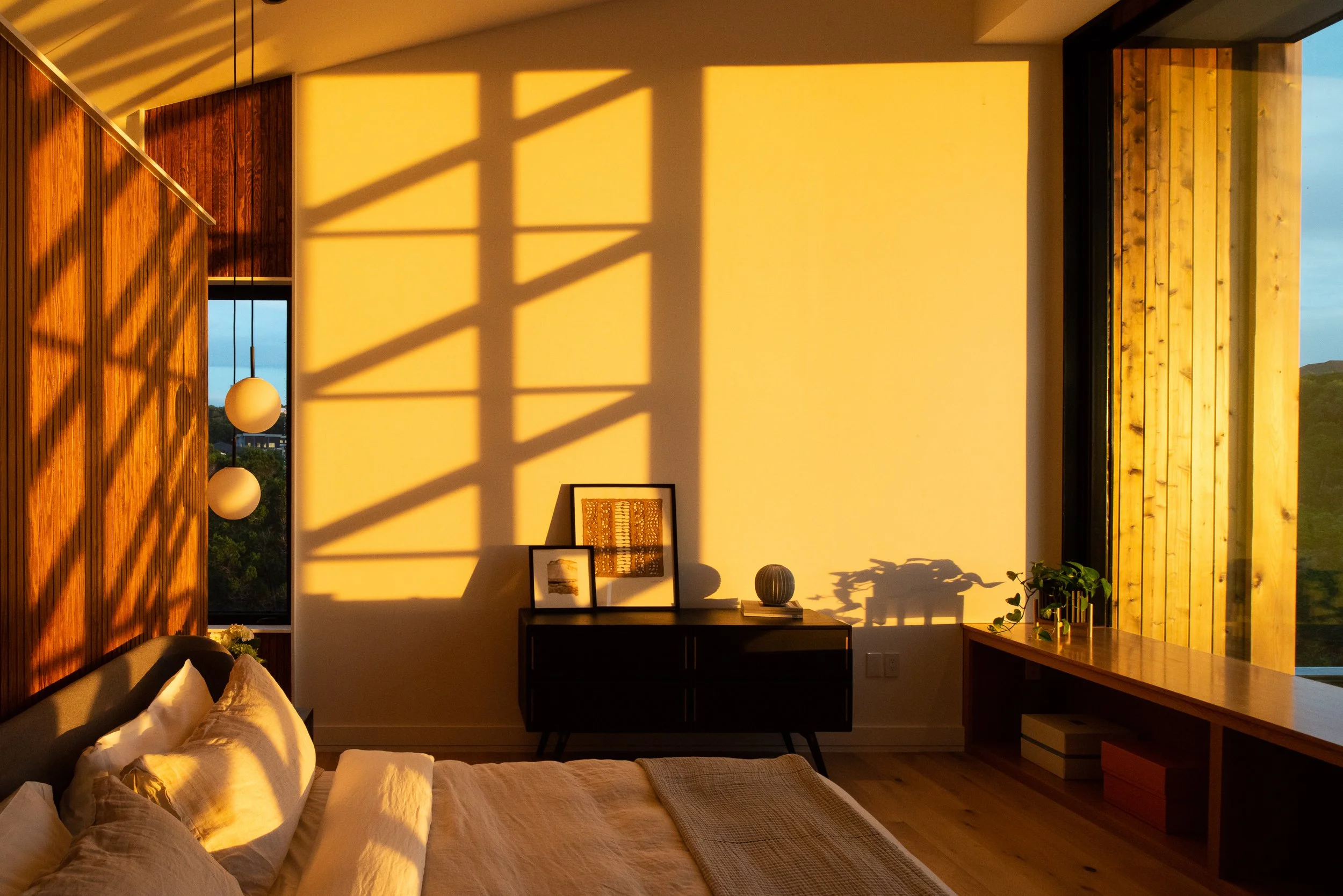
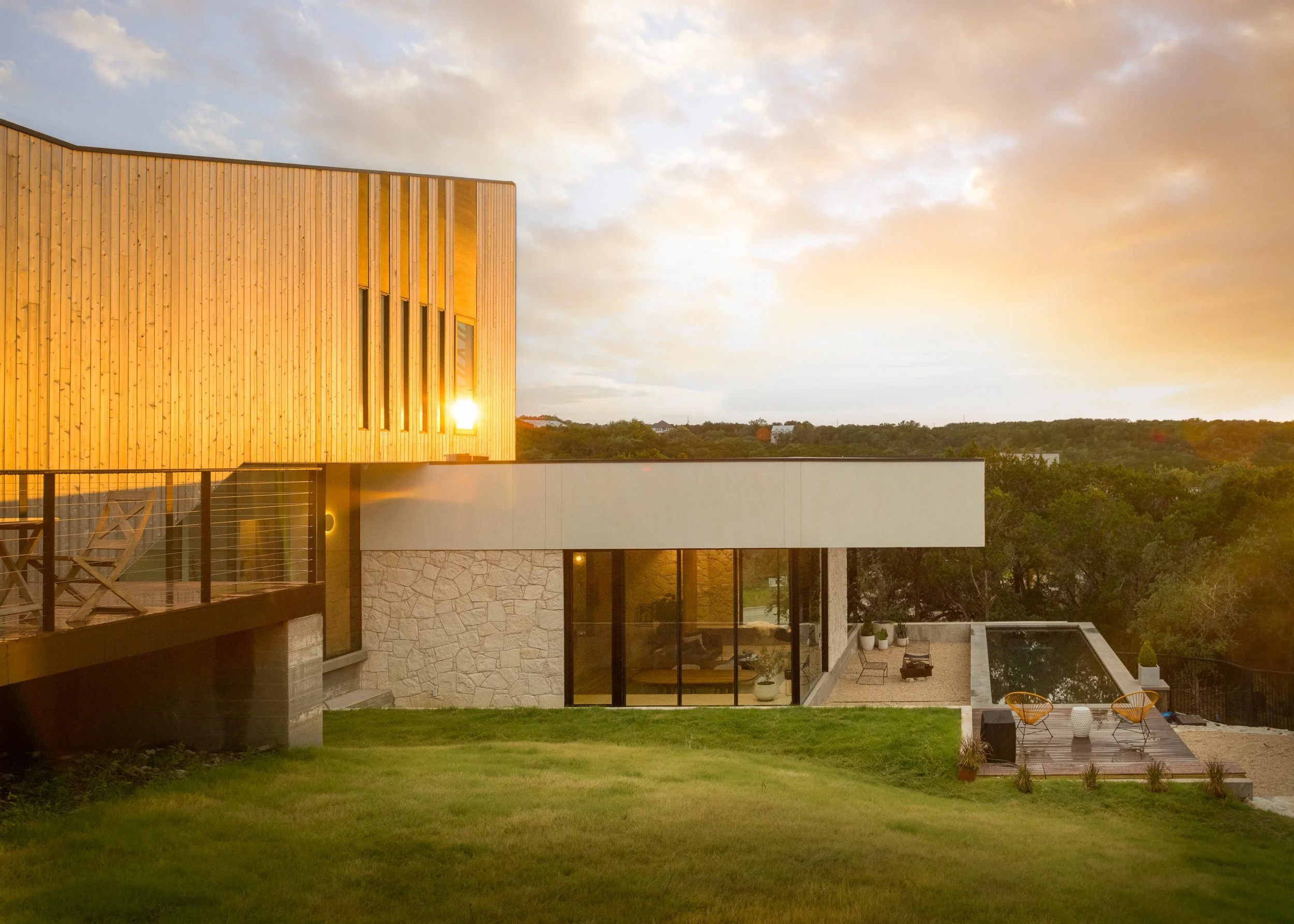
North Arrow Studio's response was to let the hill dictate the architecture. Rather than fighting the grade with retaining walls or a massive pad, they stacked the program in terraced volumes that step down the slope. The result is a home that reads as intimate and pedestrian-scaled from the street, then unfolds dramatically as you move through it — each level revealing a new relationship to the landscape below.
The steep grade became the driving force behind the design. From the street to the back of the property, it rises more than fifty feet.
For photography, this kind of sectional complexity is a gift. Every vantage point tells a different story — the compressed entry sequence, the moment the space opens to the preserve, the layered volumes seen from below. The challenge is choosing which stories to tell and in what order.
Material Honesty in the Hill Country
The material palette is restrained and deliberate: warm vertical cedar siding on the upper volume, native limestone below, and large expanses of glass in between. There's a striking glass "belly" carved into the transition between levels that houses a music room and meditation space — one of the home's most distinctive architectural moves. Custom angled glazing floods this interstitial space with light, and from the exterior it reads almost like the house is breathing.
Photographing material transitions like this requires careful attention to how light interacts with each surface at different times of day. Cedar reads warm and textured in morning sidelight but can flatten in harsh midday sun. Limestone picks up subtle color from the surrounding landscape. The glass belly needed to be shot at a moment when it was transparent enough to reveal the interior but still reflective enough to show the landscape — a narrow window that depends on time of day and sky conditions.
Indoor-Outdoor as Philosophy
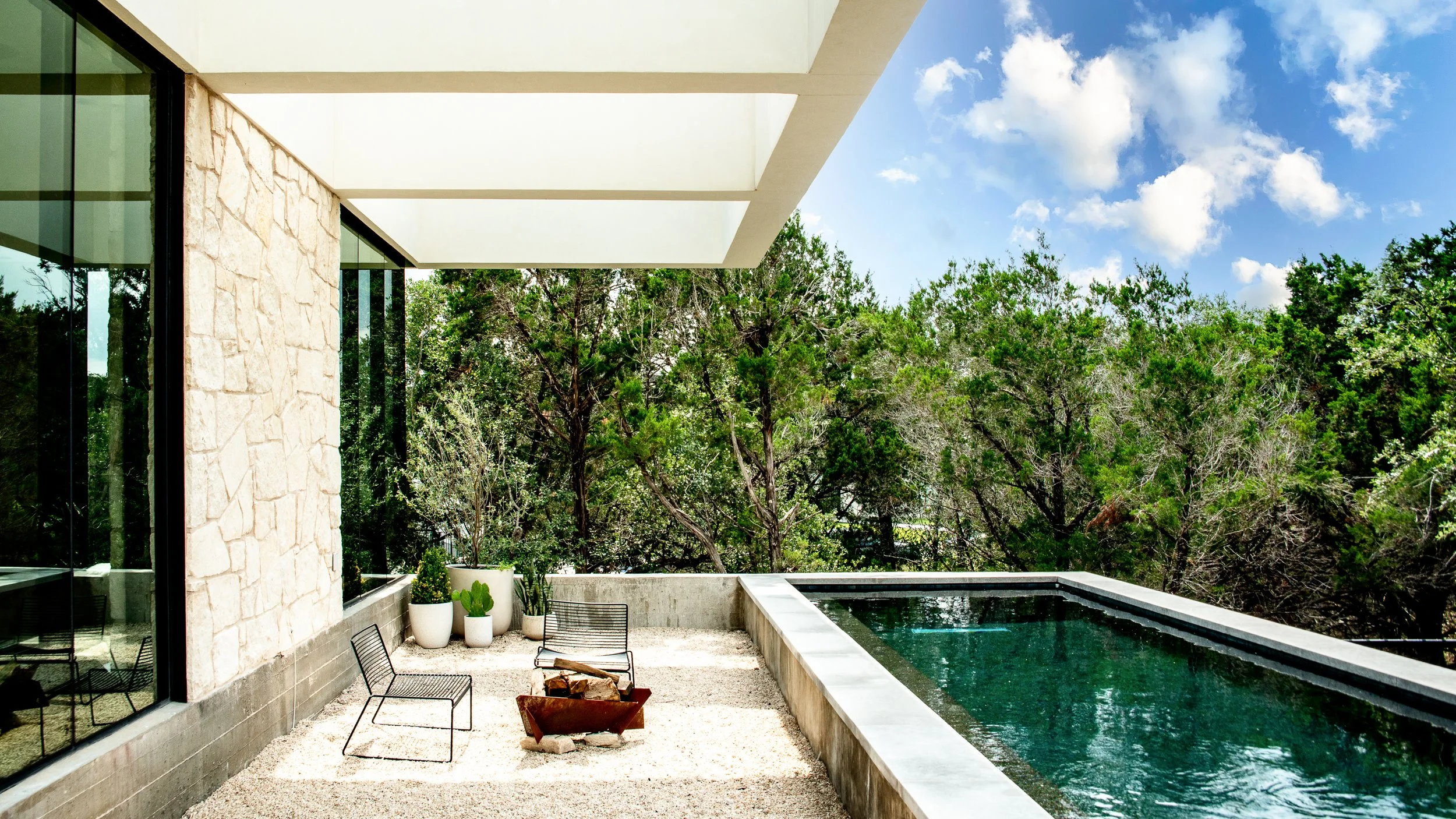
Austin architecture has always engaged with the outdoors, but the Lean on Me House takes it further than most. A courtyard pool with cantilevered sky frames extends the living spaces outside. A rooftop deck offers panoramic views of the preserve. A detached casita with guest bedroom and tree-shaded cabana creates a secondary outdoor living zone. Solar panels and rainwater harvesting round out the sustainability story.
From a photography standpoint, this kind of permeability means the exterior is never just backdrop — it's always in conversation with the interior. Framing a shot through the living room toward the pool courtyard and the preserve beyond is really about capturing three layers of space in a single image. The architecture asks you to see through it, and the photography needs to honor that transparency.
Why This Work Matters
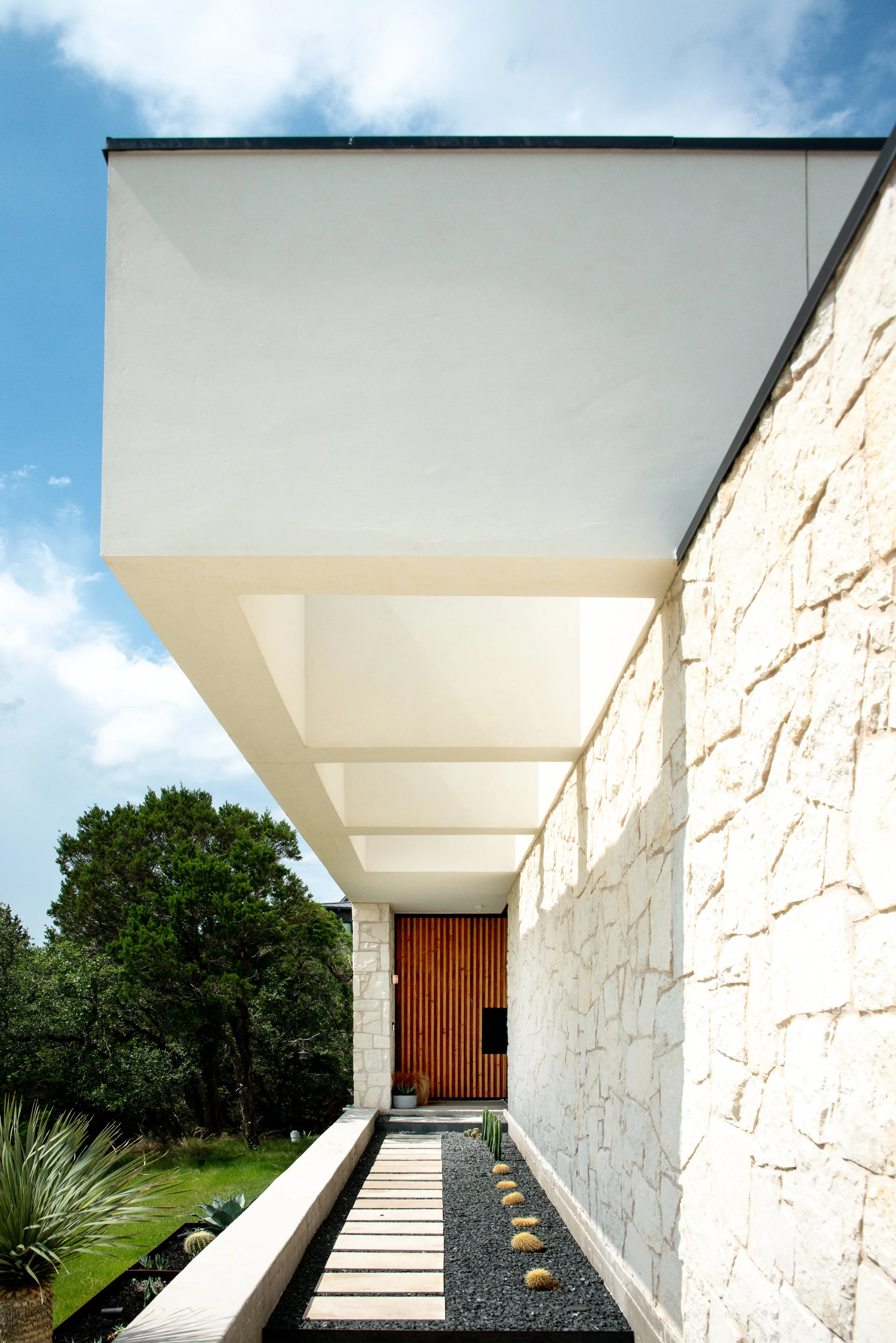
The Lean on Me House has had a remarkable trajectory — from completion in 2021 through the AIA Austin Homes Tour, features in Tribeza and other publications, to winning Austin Home's Best Home in the Hill Country four years later. That longevity speaks to the strength of the design. Good architecture doesn't age out.
For architects, builders, and designers, this project is a reminder of something I see in my work every day: the images that represent your projects will outlast almost every other form of marketing you invest in. They'll appear in award submissions, publications, websites, and social media for years — sometimes decades.
That's the return on investment in architectural photography. Not a single shoot for a single purpose, but a visual asset that compounds in value every time it's used.
Project Details Architecture: North Arrow Studio Location: Barton Creek Habitat Preserve, Austin TX Completed: 2021 Builder: Foresite Recognition: Austin Home 2025 Best Home in the Hill Country.
Have a project that deserves to be seen? I work with architects, builders, and designers to create images that earn publications, win awards, and build portfolios. Let's talk about yours. tobindavies.com/contact